The AI Earthquake: How Artificial Intelligence is Rocking the Stock Market – And What It Means for Our Future!
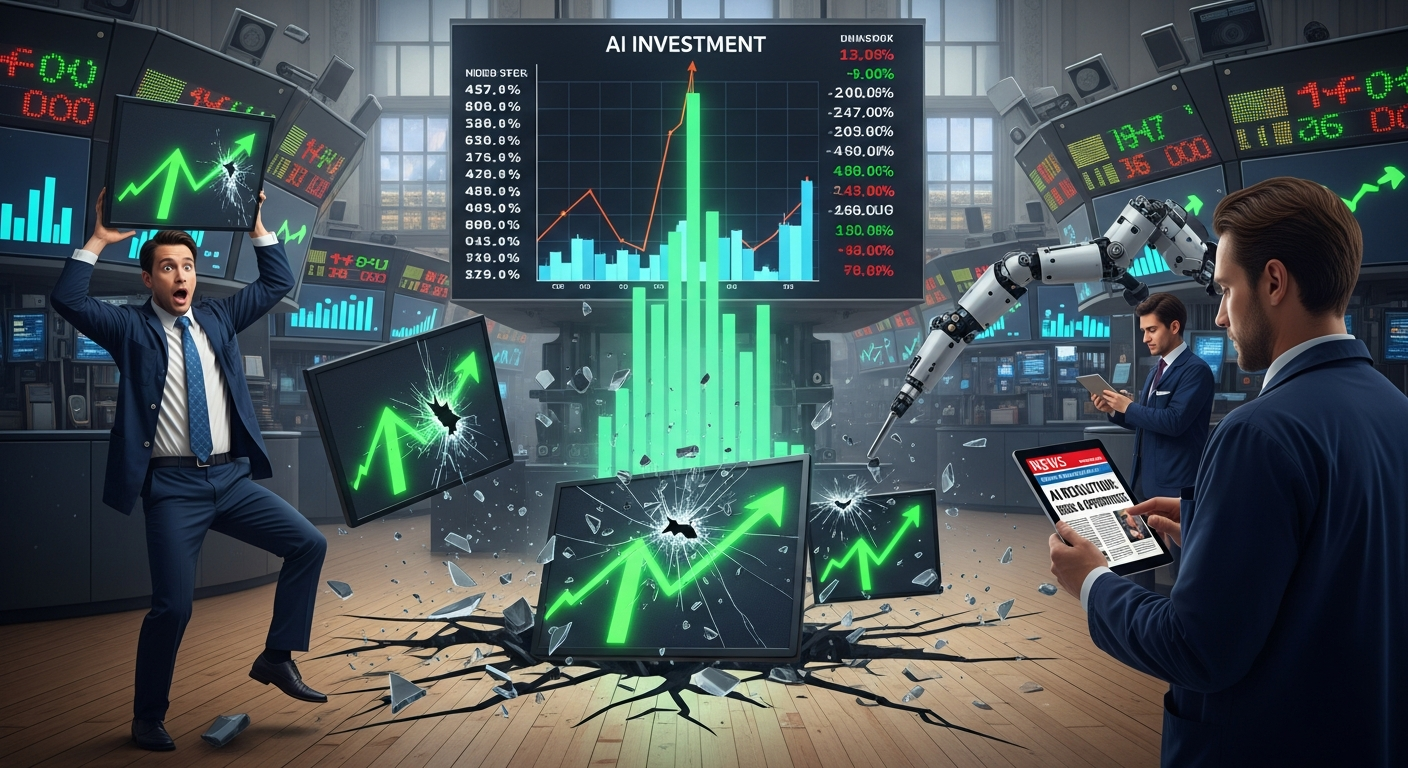
The AI Earthquake: How Artificial Intelligence is Rocking the Stock Market – And What It Means for Our Future!
Estimated reading time: 10 minutes
Key Takeaways
- Artificial Intelligence (AI) is now a primary driver of economic growth, even outperforming traditional sectors like consumer spending at times.
- Massive investments, particularly by “hyperscalers” like Google and Microsoft, are fueling an infrastructure boom in AI chips, servers, and data centers, with billions being poured into these foundational technologies.
- The United States leads globally in AI funding, especially in generative AI, which explains the strong performance of U.S. tech stocks.
- AI’s immense power demands are driving investment in energy and grid infrastructure, including nuclear power, signaling a multi-year capital expenditure pipeline.
- AI tools are significantly boosting productivity across various industries, expanding profit margins and strengthening company earnings beyond just the tech sector.
- Despite the immense potential, risks include the still modest GDP impact, volatility in tech investment cycles, and potential bottlenecks in energy grid capacity and permitting.
- For investors, diversification is key; while AI offers significant opportunities, reliance on only a few “winners” carries inherent risks.
Table of contents
- The AI Earthquake: How Artificial Intelligence is Rocking the Stock Market – And What It Means for Our Future!
- Key Takeaways
- AI: Reshaping the Stock Market – And Our Future!
- 1. AI: The Brand-New Engine Driving Our Economy Forward!
- 2. The Mighty Investment Wave: A Tsunami of Cash for Chips, Data Centers, and Incredible Infrastructure!
- 3. The Global AI Funding Frenzy: A Structural Shift That’s Changing Everything!
- 4. Powering the Future: Energy, Infrastructure, and the Next Big AI Boom!
- 5. AI’s Productivity Promise: Smarter Work, Stronger Company Earnings, and a Brighter Future of Work!
- 6. The Road Ahead: What to Watch Out For – Risks and the Sustainability of the AI-Driven Market!
- 7. AI’s Unwavering Grip on the Stock Market: What All This Means for Investors and Our Future!
- Frequently Asked Questions
AI: Reshaping the Stock Market – And Our Future!
Hold onto your hats, fellow explorers of the digital frontier! Something truly monumental is happening right before our eyes, and it’s shaking up the entire world of money, business, and how we live. We’re talking about Artificial Intelligence, or AI, and its incredible power to reshape the stock market. Think of the stock market as a giant scoreboard where companies’ values go up and down. Right now, AI is not just a player on that field; it’s practically the referee, the star player, and the team owner all rolled into one! This isn’t just about fancy robots anymore; it’s about a force so strong it’s driving massive investments, changing how economies grow, and making everyone wonder: where will this amazing journey take us next? For more insights, visit aiworkshops.in/top-research-topics-for-2025
This week, we’re diving deep into the thrilling story of how AI is becoming one of the most powerful engines driving both how the stock market performs and where big companies choose to spend their money. Get ready to uncover the secrets behind massive spending by giant tech companies, record-breaking global investments in AI, and the big question everyone is asking: are these soaring company values built on solid ground, or are they flying too close to the sun? Join us as we explore the dazzling impact of AI on our world, piece by fascinating piece!
1. AI: The Brand-New Engine Driving Our Economy Forward!
Imagine our country’s economy like a super-fast race car. For many years, things like people buying new houses or lots of shopping were the main engines making that car zoom. But guess what? A brand-new, super-charged engine has just been added, and it’s called Artificial Intelligence! According to the smart folks at J.P. Morgan Asset Management, AI is rapidly becoming the new “bellwether” for how the U.S. economy is growing. A “bellwether” is like the leading sheep in a flock – it shows everyone else the way. And right now, AI is leading the way!
This isn’t just a small change; it’s a huge shift. In the first half of 2025, the money spent on all things AI added about 1.1 percentage points to how much our country’s economy, measured by something called GDP (Gross Domestic Product), grew. That’s a fancy way of saying AI made our economy grow by a whole lot! For a little while, AI was actually a bigger engine of growth than all the shopping people were doing – imagine that!
But here’s another cool thing: AI is also making our economy tougher, like giving it a superhero shield. When people aren’t spending as much money, or when it costs more to borrow money (because of something called “interest rates”), other parts of the economy might slow down. But AI keeps going strong! Why? Because building new chips, super-fast computers (servers), and giant digital storage places (data centers) for AI doesn’t get slowed down as much by those things. It’s like building a fortress – you need to do it regardless! This means AI adds a kind of “resilience” or strength to the economy, keeping it chugging along even when other parts feel a bit wobbly.
So, what does all this mean for the stock market? It means that people who invest their money aren’t just thinking of AI as a cool new technology anymore. They see it as a huge “macro theme” – a big, overarching trend that can help companies earn more money and help the whole economy grow, even when interest rates are high. This understanding helps them feel good about paying higher prices for company stocks that are deeply involved in AI, because they believe these companies have a very bright future. It’s a thrilling time to watch how AI development is impacting everything!
2. The Mighty Investment Wave: A Tsunami of Cash for Chips, Data Centers, and Incredible Infrastructure!
Prepare to be amazed by the sheer scale of money being poured into AI right now! It’s like a giant wave of investment, creating new industries and making existing ones boom. This isn’t just pocket change; we’re talking about billions upon billions of dollars being spent by giant companies to build the future of AI.
J.P. Morgan shared some mind-blowing numbers. In just the second quarter of 2025, spending on tech-related things added a massive 4.3 percentage points to how much U.S. businesses invested overall. This incredible boost helped to balance out declines in other areas of business investment. Think of it: while some parts of the business world might have slowed down, AI-related spending was roaring ahead, pushing everything forward!
One of the most exciting areas is in special computer parts. Investment in “computers and related equipment” shot up by about 41% in just one year! Why such a massive jump? Because companies are buying tons of super-powerful computers called “servers” and special chips called “GPUs” (Graphics Processing Units). These are the brains and muscles that do all the heavy lifting for AI programs. Imagine trying to build the smartest computer in the world – you’d need a lot of these advanced parts! These are the building blocks for incredible AI-powered solutions.
And where do all these powerful computers and chips live? In huge buildings called “data centers.” These are like massive digital warehouses filled with rows and rows of computers. Data-center construction hit an annual rate of about $40 billion in June 2025, which is roughly 30% more than the year before! In a world where other kinds of building projects might be slowing down, data centers are skyrocketing, standing out as a true marvel. It’s like a massive construction boom happening just for AI!
Now, who are the biggest spenders in this incredible build-out? They are called “hyperscalers” – enormous tech companies like Meta (which owns Facebook and Instagram), Alphabet (which owns Google), Microsoft, Amazon, and Oracle. These giants are expected to spend a mind-boggling $342 billion in 2025! That’s a truly colossal amount of money, and much of it is going towards buying those essential AI chips, building more data centers, and setting up all the other things AI needs to work. But it’s not just the biggest tech companies. Even private AI labs, like the brilliant minds behind OpenAI (who made ChatGPT) and Anthropic, are spending huge amounts of money to create even smarter AI models. Discover more about Anthropic’s future at aiworkshops.in/anthropic-ai-powerhouse-future. This constant investment means the demand for powerful computing and special buildings just keeps growing.
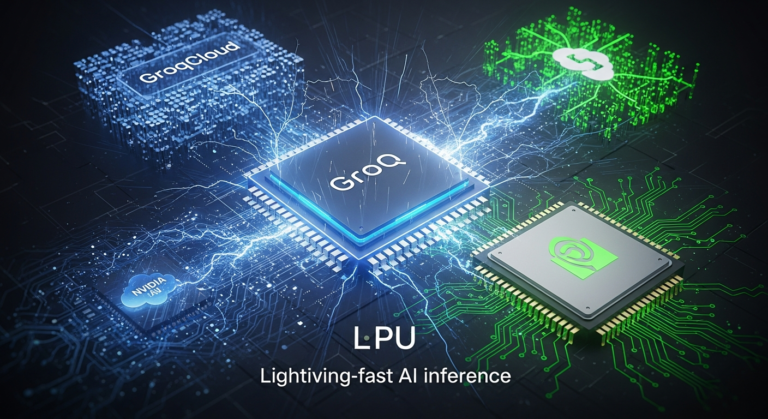
For the stock market, this huge wave of spending has a clear effect. It’s why companies that make semiconductors (those tiny but mighty chips), equipment suppliers (the companies that make the machines that make the chips or build the data centers), “data-center REITs” (companies that own and manage those huge data centers), and even utilities and power infrastructure companies are seeing their stock prices climb. For a deeper dive into AI chip competition, check out aiworkshops.in/ai-chip-showdown-google-stock. However, there’s also a question mark: what if the demand for AI slows down? Could this big spending wave eventually cool off? It’s a thrilling ride with some careful watching needed! This is truly a digital transformation on a global scale.
3. The Global AI Funding Frenzy: A Structural Shift That’s Changing Everything!
The incredible investment in AI isn’t just happening in a few places; it’s a worldwide phenomenon, showing us just how deeply AI is changing our world. The Stanford 2025 AI Index Report, a super important study, gives us a clear picture of this global rush to embrace AI.
Let’s look at the numbers, and they are astonishing! Across the globe, companies invested about $252.3 billion in AI in 2024. That’s a gigantic sum of money! Even more exciting, private investment in AI (money from companies and wealthy individuals) went up by a whopping 44.5% in just one year. And when companies merged with or bought other AI companies (something called M&A), that also went up by 12.1%. This isn’t a quick trend; it’s a long-term change! The total amount of money invested in AI has grown more than 13 times since 2014. That means AI isn’t a passing fad; it’s a huge, “structural trend” – a fundamental shift in how our world works, here to stay and grow even bigger!
And within AI, there’s a superstar called “generative AI.” This is the kind of AI that can create new things, like writing stories, making pictures, or composing music (think ChatGPT and similar tools!). More on OpenAI’s innovations at aiworkshops.in/openai-news-today-innovation-future. Private investment in generative AI was around $33.9 billion in 2024. That’s nearly 19% more than in 2023, and an absolutely mind-boggling 8.5 times higher than in 2022! Generative AI now makes up more than 20% of all private money invested in AI. It’s clear that people believe in the power of AI applications that can create.
Now, let’s talk about where all this money is going. Not all countries are investing equally. The United States is truly leading the charge. In 2024, private AI investment in the U.S. hit about $109.1 billion. To give you an idea of how big that is, it’s nearly 12 times more than what China invested (about $9.3 billion) and 24 times more than what the U.K. invested (about $4.5 billion)! Imagine one country spending so much more than others on this cutting-edge technology!
This gap is even wider when we look specifically at generative AI. The U.S. invested about $25.4 billion more in generative AI than China, the European Union, and the U.K. combined. And this gap is actually getting bigger, not smaller, compared to the year before. This incredible “U.S. dominance” in AI funding is a huge reason why American stock market indexes – especially those with giant tech companies and semiconductor makers – have been performing so well, leading the way for global markets. It shows that AI innovation is thriving in a big way in the USA. Learn about Claude AI’s revolution at aiworkshops.in/claude-ai-revolution-350-billion
4. Powering the Future: Energy, Infrastructure, and the Next Big AI Boom!
You know how your phone needs to be charged to work? Well, imagine something infinitely bigger! All these amazing AI systems, the super-fast computers, and the giant data centers need an enormous amount of electricity to run. It’s like a hungry monster that constantly needs power! And this massive need for energy is creating a whole new exciting part of the stock market to watch.
The Stanford report highlights some truly astonishing developments in this area. For example, Microsoft, one of the biggest tech companies in the world, announced a massive $1.6 billion deal. What for? To restart the famous Three Mile Island nuclear reactor! They want to use this powerful energy source to fuel their AI operations. And they’re not alone! Google and Amazon, two other tech giants, have also signed agreements for nuclear energy to support their growing AI needs. This is a game-changer – it shows that AI’s hunger for power is so great that companies are looking to some of the most powerful and reliable energy sources available.
This incredible demand for energy is making investors keenly interested in a whole new set of companies:
- Utilities and power producers: These are the companies that generate and deliver electricity. Especially those involved in nuclear power or who manage the giant electricity grids.
- Grid-upgrade and transmission equipment manufacturers: The electricity grid (the network of power lines and stations) needs to be stronger and smarter to handle all this new power. Companies that make the equipment to upgrade these grids are becoming very important.
- Real-asset owners: These are companies that own the land or the actual structures related to data centers and energy infrastructure. Their properties are becoming incredibly valuable!
J.P. Morgan points out that the next exciting phase of AI investment won’t just be about chips and servers. It’s going to be about building the massive “supporting infrastructure” that AI needs to thrive. Think about it: new power plants and huge upgrades to our electricity grids take years to plan and build. This means there’s a “multi-year capex pipeline” – a steady stream of spending and building that will go on for many, many years! It’s an exciting time to be alive, witnessing the dawn of new industries born from the demands of advanced machine learning models and cloud computing.
5. AI’s Productivity Promise: Smarter Work, Stronger Company Earnings, and a Brighter Future of Work!
Imagine having a super-smart helper by your side, making your work faster, easier, and better. That’s exactly what AI tools are doing for workers all around the world! Stanford’s AI Index report reviewed many studies and found something truly exciting: when people use AI tools, they become more productive. That means they can get more done in less time, and often, do it better!
One of the coolest parts is how AI can help everyone. The report shows that AI can often “narrow the performance gap” between workers who are highly skilled and those who are still learning. It’s like giving everyone a boost, helping those who might be newer or less experienced to perform more like seasoned pros. This is amazing for the future of work!
For the stock market, this has huge implications for how companies earn money. It supports a powerful “earnings narrative” – a story about how companies can make more money. Here’s why:
- Expanding margins: When AI helps automate tasks (making robots or computer programs do repetitive jobs) or “augments” staff (meaning AI helps human workers do their jobs better, not replacing them), companies can save money and be more efficient. This means they can make more profit, which is called expanding their “margins.”
- Economy-wide technology: AI isn’t just for big tech companies. It’s a technology that can help almost every industry! This means software companies, service providers, finance companies (banks and investment firms), healthcare providers, and even industrial businesses can all benefit. Imagine AI helping doctors diagnose illnesses faster, or helping factories build things more efficiently. It’s truly an economy-wide game changer, bringing AI adoption to every corner of our lives.
This widespread benefit means that the positive effects of AI could ripple out across the entire stock market, helping a wide variety of companies grow and succeed, not just a small group of tech giants. It’s an exciting vision of a future where automation and intelligence make us all better at what we do!
6. The Road Ahead: What to Watch Out For – Risks and the Sustainability of the AI-Driven Market!
While the world of AI and the stock market is brimming with excitement, it’s also important to be like a good reporter and look at all sides of the story. Both J.P. Morgan and Stanford remind us that even the most exciting trends have challenges and things we need to watch out for. After all, every thrilling adventure has its tricky parts!
Here are some important points that matter for people investing in stocks:
- GDP impact is still modest: Even with all the amazing growth, the overall impact of AI on our country’s GDP (how much our economy grows) is still relatively small. Much of the excitement right now is focused on the very early stages, like building hardware and infrastructure (chips, data centers). While important, data centers themselves don’t employ a huge number of people, which means the positive effects on broad wages across the country haven’t fully kicked in yet.
- Imported technology goods: Many of the super-advanced AI computer parts are actually made in other countries and then brought into the U.S. When a country buys a lot of goods from overseas, it can actually make the measured GDP appear a little lower. This makes the overall picture of AI’s effect on the economy a bit more complex.
- Tech investment cycles can be volatile: History teaches us that spending on technology can go up and down pretty dramatically, like a roller coaster! If, for some reason, the demand for AI doesn’t grow as fast as everyone expects, or if companies don’t figure out how to make a lot of money from AI as quickly, then those huge “hyperscalers” (like Google and Amazon) could suddenly cut back on their spending. If that happens, it would be a big bump in the road for companies that make semiconductors, equipment, and run data centers. It’s important to remember that even the most innovative technologies can face ups and downs.
- Grid capacity and permitting bottlenecks: Remember how much electricity AI needs? Well, our existing power grids might not be ready for all that demand. And getting permission to build new power plants or upgrade grids (something called “permitting”) can take a very long time. These “bottlenecks” – like traffic jams on a busy road – could slow down how quickly AI infrastructure can be built, even if there’s plenty of money available to build it.
From the perspective of building a strong “portfolio” (a collection of different investments), J.P. Morgan stresses something super important: diversification. That means not putting all your eggs in one basket! While AI can certainly help economies grow, if you only invest in a few AI “winners,” you might be vulnerable if the exciting cycle takes a turn. Smart investors spread their money around to protect themselves. It’s about being excited, but also being smart and prepared for anything!
7. AI’s Unwavering Grip on the Stock Market: What All This Means for Investors and Our Future!
So, what’s the big takeaway from this incredible journey into the heart of AI and the stock market? It’s clear as day: Artificial Intelligence is not just a trend; it’s a colossal, game-changing force that is absolutely central to where the stock market is headed, especially in the United States.
AI is the main reason why U.S. stocks, particularly those of giant tech companies, semiconductor makers, and businesses linked to data centers, have been leading global markets. This leadership is built on a foundation of truly staggering numbers:
- Triple-digit-billion hyperscaler capex: Imagine those tech titans like Google, Amazon, and Microsoft pouring hundreds of billions of dollars into AI every year! This colossal spending creates a ripple effect across countless industries.
- A $250B+ global AI investment run-rate: The world is collectively investing over a quarter of a trillion dollars annually into AI. This isn’t just an investment; it’s a global commitment to a future powered by intelligence.
- A credible productivity and earnings story across sectors: AI isn’t just about faster computers; it’s about making work smarter, making businesses more profitable, and creating entirely new opportunities across almost every industry, from healthcare to finance.
But the story doesn’t end there. Experts and investment managers are increasingly looking at AI through a new lens. They see it not just as a piece of technology, but as:
- A new macro variable: AI is now a fundamental part of how we understand economic growth and how businesses decide to invest. It’s like adding a powerful new ingredient to the economic recipe.
- A source of both resilience and potential cyclical risk in markets: AI can help the economy stay strong and grow even when other parts might falter, giving it a powerful “resilience.” But, like any big tech trend, it also carries the “cyclical risk” that if demand doesn’t meet sky-high expectations, things could slow down.
The stock market is currently riding this incredible AI wave, filled with both immense opportunity and important considerations. What an exhilarating time to be witnessing this revolution! The future of how we live, work, and invest is being written right now, powered by the incredible engine of Artificial Intelligence. Keep your eyes peeled, because the AI earthquake is far from over – and its tremors will continue to reshape our world for years to come!
Frequently Asked Questions
Q: How is AI impacting the U.S. economy’s GDP?
A: In the first half of 2025, AI-related spending contributed approximately 1.1 percentage points to U.S. GDP growth, at times even surpassing consumer spending as a growth driver. It also adds resilience by stimulating investment in hardware and infrastructure regardless of interest rates.
Q: What are “hyperscalers” and what is their role in AI investment?
A: Hyperscalers are enormous tech companies like Google, Microsoft, Amazon, and Meta. They are the biggest investors in AI infrastructure, expected to spend around $342 billion in 2025 on AI chips, servers, and data centers, driving a significant portion of global AI development.
Q: Why is the U.S. leading in global AI funding?
A: In 2024, private AI investment in the U.S. reached about $109.1 billion, far exceeding other countries like China and the U.K. This dominance, especially in generative AI, is a key reason for the strong performance of American tech stocks and leadership in global markets.
Q: What are the emerging investment areas driven by AI’s energy demands?
A: AI’s massive electricity needs are spurring investment in utilities and power producers (including nuclear energy), grid-upgrade and transmission equipment manufacturers, and real-asset owners related to data centers and energy infrastructure, indicating a multi-year capital expenditure pipeline.
Q: What are the main risks associated with the AI-driven stock market?
A: Risks include the still modest overall GDP impact of AI, reliance on imported technology goods, potential volatility in tech investment cycles leading to spending cutbacks, and bottlenecks in energy grid capacity and permitting for new infrastructure. Diversification is crucial for investors.