The Unstoppable Surge: All the Mind-Blowing AI News You Need to Know!
The Unstoppable Surge: All the Mind-Blowing AI News You Need to Know!
Estimated reading time: 8 minutes
Key Takeaways
- Monumental AI breakthroughs occurred in December 2025, particularly in *weather forecasting* and *digital efficiency* with new models from NOAA and Google.
- AI is receiving **global recognition and significant investment**, with “the architects of AI” named Time’s Person of the Year 2025, soaring federal regulations, and massive government funding worldwide.
- AI is **transforming healthcare and medicine**, evidenced by a dramatic increase in FDA-approved AI medical devices, and initiatives to reduce costs and improve outcomes in areas like cardiovascular health.
- The **development of AI models** is rapidly scaling, increasingly led by industry in the U.S., with intense competition driving *performance convergence* and global expansion.
- AI is making **real-world impacts** in autonomous vehicles, advanced robotics, semiconductor manufacturing, improved credit scoring, and innovative web browsing experiences.
- Looking ahead, AI’s growth projects **massive economic expansion** (e.g., in healthcare) but also raises crucial questions regarding its *energy footprint and climate impact*.
Table of contents
- The Unstoppable Surge: All the Mind-Blowing AI News You Need to Know!
- December 2025: A Month of Monumental Breakthroughs!
- AI Takes Center Stage: Recognition and Rules for the Future
- AI to the Rescue: Transforming Healthcare and Medicine
- The AI Assembly Line: How Super Models Are Born!
- AI in Action: Real-World Wonders Everywhere!
- Looking Ahead: The Economic Pulse and Big Questions
- The Future is Here: What’s Next in AI News?
- Frequently Asked Questions
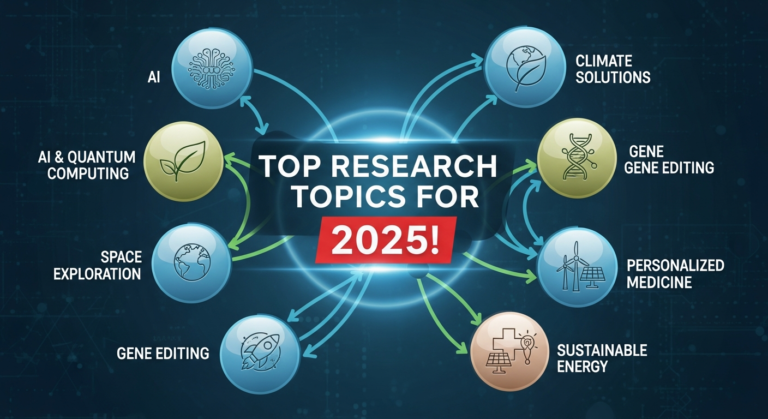
Hold onto your hats, fellow explorers of the future! The world of artificial intelligence is absolutely buzzing, and this week’s AI news is nothing short of spectacular. It feels like every single day brings a fresh wave of incredible discoveries, jaw-dropping inventions, and game-changing updates that are making our world smarter, faster, and more exciting than ever before. If you thought AI was just a futuristic dream, think again! We’re living in that future right now, and the “architects of AI” – the brilliant minds building these wonders – have been crowned as Time magazine’s 2025 Person of the Year. That alone tells you how huge this all is! Let’s dive into all the thrilling details and see just how far AI has come, and where it’s heading next. https://aiworkshops.in/top-research-topics-for-2025
December 2025: A Month of Monumental Breakthroughs!
Get ready to be amazed, because December 2025 has been a whirlwind of truly monumental advancements in the AI news world, especially when it comes to understanding our planet and boosting our digital lives.
First up, imagine a world where we can predict massive storms and extreme weather with unbelievable accuracy, giving everyone more time to prepare and stay safe. Well, that world is here! On December 16, 2025, the amazing scientists at the National Oceanic and Atmospheric Administration (NOAA) launched a brand-new generation of AI-powered global weather models. This isn’t just a small step; it’s a giant leap! These super-smart AI models are designed to make predicting the weather incredibly precise and super speedy. Think about it: better lead times for hurricanes, blizzards, and floods means communities can get ready, save lives, and protect homes and businesses like never before. This is the kind of AI news that truly touches everyone, from farmers planning their crops to families planning their vacations. It’s a testament to how AI can help us work with nature, rather than be surprised by it.
But the innovation doesn’t stop with the weather! Tech giant Google also had a huge month, unveiling not one, but two incredible AI wonders. On December 10, 2025, Google introduced us to Gemini 3 Flash https://aiworkshops.in/gemini-google-ai-revolution. Doesn’t that name sound fast? It is! This isn’t just another AI model; it’s a super-lightweight champion built for pure speed and efficiency. Imagine an AI that can understand and remember a massive amount of information at once – like a super-smart brain that never forgets what you just told it – but also works incredibly fast without costing too much money to run. That’s Gemini 3 Flash! It’s designed for real-time applications, which means it can help you instantly. Think about live translation during a video call, where it understands different languages in a blink, or helping programmers write code at lightning speed. This means smoother conversations across the globe and super-fast help for those building the next big thing in technology. It’s a game-changer for how quickly we can get things done and communicate.
And as if one wasn’t enough, Google DeepMind, their super-smart AI research team, launched GenCast on December 8, 2025. This is another spectacular piece of AI news for weather lovers and anyone who cares about planning for the future. GenCast is a generative AI model, which means it can *create* new and powerful predictions for medium-range weather. Unlike older, more complicated weather models, GenCast can give us highly detailed and probabilistic forecasts. What does “probabilistic” mean? It means it tells us not just what the weather *will* be, but how *likely* it is to be that way, giving us a clearer picture of possible outcomes. And here’s the best part: it does all this with way less computer power than traditional methods, yet it’s even *better* at predicting those tricky extreme weather events. So, whether it’s a big storm brewing next week or just a rainy weekend, GenCast is helping us peek into the future with much more confidence. These twin weather forecasting advancements from NOAA and Google DeepMind truly mark a new era in how we understand and prepare for the natural world around us, all thanks to the marvels of AI. It’s thrilling to think about the lives that will be saved and the peace of mind these technologies will bring.
AI Takes Center Stage: Recognition and Rules for the Future
It’s clear that AI is no longer just a cool tech gadget; it’s a force that’s changing our entire world. And when something becomes this important, it starts getting a lot of attention, from awards to new rules. This part of our AI news update shows just how seriously the world is taking AI.
Let’s start with a massive applause! Time magazine, famous for picking the most influential person of the year, made an absolutely monumental choice for 2025: they named “the architects of AI” as their Person of the Year. This isn’t just about one person; it’s a nod to all the brilliant scientists, engineers, and thinkers who are building these intelligent systems. It’s a powerful recognition of how AI is shaping our society, our economy, and our daily lives in profound ways. These “architects” are truly building the future, brick by digital brick, and the world is taking notice.
With such rapid growth, it’s only natural for governments to start thinking about how to keep everything fair, safe, and moving in the right direction. The pace of Federal Regulatory Growth in the U.S. has been incredible. In 2024 alone, U.S. federal agencies introduced a staggering 59 AI-related regulations! That’s more than double the number from 2023. This shows that governments are working hard to catch up and make sure AI is developed and used responsibly. https://aiworkshops.in/anthropic-ai-powerhouse-future And it’s not just America; all around the globe, legislative mentions of AI — meaning laws and rules being discussed or created — jumped by 21.3% across 75 countries. To put that into perspective, that’s a whopping ninefold increase since 2016! Everyone, everywhere, is talking about how to guide AI into a responsible future.
And talking about guidance, big nations are not just talking; they’re putting their money where their mouth is with massive Government Investment into AI development. Countries around the world are committing enormous amounts of money to ensure they are leaders in this new AI age. Canada has pledged a cool $2.4 billion, showing its commitment to innovation. China has launched a huge $47.5 billion fund specifically for semiconductors, which are the super-smart brains of AI computers. France is investing a truly breathtaking €109 billion (that’s a lot of euros!) to push its AI capabilities. India has committed $1.25 billion, recognizing the importance of AI for its future. And perhaps one of the most ambitious projects comes from Saudi Arabia, with their “Project Transcendence,” a monumental $100 billion initiative! These mind-boggling figures tell us that AI isn’t just a science project; it’s a national priority, a race for global leadership, and a commitment to unlocking new opportunities for their citizens.
In the U.S., the White House is making sure America stays at the forefront of this technological revolution. They’ve released important White House AI Policy guidance, which is like a roadmap for creating a national plan for AI. The goal? To make sure the U.S. continues to lead the world in AI advancements and to protect its economic strength and security. This is all about fostering innovation while also setting clear guidelines for how AI should be used. Building on this, the National Institute of Standards and Technology (NIST) took a big step by launching new NIST AI Centers. These centers will focus on how AI can be used safely and effectively in crucial areas like manufacturing (making things in factories) and critical infrastructure (things like power grids and communication networks). These centers are directly supporting the White House’s recommendations, ensuring that AI is not just powerful, but also reliable and safe for everyone. This whole wave of recognition and policy-making shows that AI has truly arrived on the world stage, demanding attention, resources, and careful planning for its incredible future. This is thrilling AI news for anyone interested in the big picture of technology and government.
AI to the Rescue: Transforming Healthcare and Medicine
One of the most exciting areas where AI is making a truly life-changing difference is in healthcare and medicine. Imagine doctors and nurses having super-smart helpers that can spot problems faster, make treatments better, and even lower the cost of staying healthy. This week’s AI news confirms that this isn’t just a dream – it’s happening right now!
The numbers alone are mind-boggling. The U.S. Food and Drug Administration (FDA) is the agency that approves new medical devices to make sure they are safe and effective. And guess what? They approved a staggering 223 AI-enabled medical devices in 2023! Let that sink in. Just eight years earlier, in 2015, they approved only six. This incredible jump shows how quickly AI is becoming a trusted and essential tool in hospitals and clinics everywhere. It’s truly reshaping not just healthcare, but also other huge areas like finance and education, making every part of our lives smarter and more efficient.
And speaking of making things better, the Department of Health and Human Services (HHS) has announced an amazing initiative to use AI to tackle two massive challenges: reducing healthcare costs and improving public health outcomes. Think about it: AI can help doctors find better ways to treat diseases, make hospital operations more efficient, and even predict health trends in communities, preventing sickness before it spreads. This is truly thrilling AI news because it means AI isn’t just about fancy gadgets; it’s about making sure everyone has access to better, more affordable healthcare.
Let’s look at a specific example in Cardiovascular Applications. Our hearts are incredibly important, and keeping them healthy is a big job. Doctors often use a special ultrasound test called an echocardiogram to look at the heart. This test involves a lot of careful measurements, like figuring out something called the left ventricular ejection fraction, which tells doctors how well the heart is pumping blood. This used to be a very detailed and time-consuming task for human experts. But now, AI-powered echocardiography is stepping in! This amazing technology is automating these labor-intensive tasks, which means the AI can do them super fast and consistently, making sure every measurement is just right. This helps doctors assess heart diseases much quicker and with greater accuracy, leading to earlier diagnoses and better treatment plans. It’s like having a super-expert assistant working tirelessly to help save lives and keep hearts healthy. This kind of dedicated application of AI truly highlights its potential to revolutionize medical care and give us all a healthier future.
The AI Assembly Line: How Super Models Are Born!
Have you ever wondered who makes all these incredible AI models that are changing our world? It’s a fascinating process, and our latest AI news gives us a peek behind the curtain at the incredible trends in AI model development.
It turns out that the world of AI model creation is becoming more and more dominated by big businesses. In 2024, nearly 90% of all the notable AI models came from industry, like major tech companies, compared to only 60% in 2023. This means that private companies are investing huge amounts of money and talent into building the cutting-edge AI that we see making headlines. While companies are leading in creating these powerful models, universities and research institutions (academia) still play a super important role. They remain the top source of highly cited research, which means they are doing the deep thinking and fundamental discoveries that pave the way for future AI breakthroughs. It’s a fantastic partnership between big business and brilliant academic minds!
When it comes to where these amazing models are being built, the U.S. Leadership is crystal clear. In 2024, institutions based in the United States produced a whopping 40 notable AI models. That’s a lot! To compare, China produced 15, and Europe just three. This shows that the U.S. is truly at the forefront of AI development, pushing the boundaries of what’s possible.
But don’t think it’s an easy race! The AI world is becoming incredibly competitive. There’s something called Performance Convergence, which means the difference in how well the best AI models perform is getting smaller and smaller. Just a year ago, there was an 11.9% gap between the very best model and the 10th-ranked one. Now, that gap has shrunk to just 5.4%. And get this: the top two models are now separated by only 0.7%! This tells us that everyone is getting incredibly good at making AI, and the competition to build the absolute best is super intense. It’s like a thrilling race where all the runners are neck and neck, pushing each other to achieve incredible speeds.
And this race requires a lot of power and data! AI models are growing at an astonishing rate, which we call Rapid Scaling. The amount of “training compute” – the sheer computer power needed to teach an AI model – is doubling every five months! Imagine your computer getting twice as powerful in less than half a year! The amount of “datasets” – the mountains of information AI learns from – is doubling every eight months. And all this incredible growth means that the power usage for AI is increasing every single year. It’s a reminder of just how much energy goes into creating these digital brains.
Finally, while the U.S. is leading, AI development is truly experiencing Global Expansion. China, for example, has rapidly closed the quality gap with U.S. models. Performance differences on major benchmarks (tests that measure how good an AI is) shrank from double digits in 2023 to nearly the same in 2024! This means Chinese AI models are becoming just as powerful as American ones, very quickly. And it’s not just the U.S. and China; AI development is spreading all over the world, with exciting new models coming out of the Middle East, Latin America, and Southeast Asia. This is brilliant AI news because it means diverse minds from all corners of the globe are contributing to the future of AI, bringing new ideas and perspectives to this incredible field.
AI in Action: Real-World Wonders Everywhere!
It’s one thing to talk about amazing AI models and how they are made, but it’s even more thrilling to see them in action, changing our daily lives! This week’s AI news highlights how AI is no longer just in labs; it’s on our roads, in our factories, and even helping us browse the internet.
Let’s start with a vision of the future that’s already here: Autonomous Vehicles. Imagine hopping into a car that drives itself, safely and efficiently, getting you where you need to go without you ever touching the steering wheel. Waymo, one of the biggest operators of these self-driving cars in the U.S., is now providing over 150,000 autonomous rides *each week*! That’s a huge number of people experiencing the future of transportation. And across the globe, in China, Baidu’s Apollo Go robotaxi fleet is also serving many cities, bringing this amazing technology to even more people. This is truly incredible – AI is literally driving us into a new era of safe and convenient travel.
Next up, let’s talk about Robotics. You might have heard about Tesla’s humanoid robot, Optimus. Well, Tesla just unveiled some significant updates to Optimus, and they are fantastic! These updates highlight incredible advances in the robot’s dexterity (how cleverly it can use its hands), its perception (how well it “sees” and understands the world around it), and how it can help with manufacturing automation. Tesla plans to deploy these amazing robots more widely in factories and logistics, helping to build things and move goods around. Imagine robots working alongside humans, making factories safer and more efficient. It’s like science fiction coming to life, right before our eyes!
AI is also making things better in places you might not expect, like in Semiconductor Manufacturing https://aiworkshops.in/ai-chip-showdown-google-stock. Semiconductors are the tiny, super-important computer chips that power everything from your phone to huge AI systems. Making them perfectly is incredibly difficult. But researchers at Purdue University have introduced something amazing called RAPTOR. This is an AI-powered defect-detection system, and it’s a superhero when it comes to spotting tiny flaws! RAPTOR achieves an incredible 97.6% accuracy in finding microscopic faults inside chips. And here’s the best part: it does it in a non-destructive way, meaning it can check chips without damaging them, and it’s all automated. This means fewer faulty chips, better electronics for all of us, and a faster way to make the brains of our digital world. This is exciting AI news for anyone who loves their tech gadgets!
Even our money and finances are getting an AI makeover. Fair Isaac Corporation, famous for its FICO credit scores, has secured patents for advanced AI and machine learning technologies designed to revolutionize Credit Scoring. This isn’t just about making credit scores faster; it’s about making them more explainable, meaning people can better understand *why* they got a certain score. It also helps with compliance, making sure everything follows the rules. And, perhaps most importantly, these new AI techniques can help assess people who were traditionally “unscorable” – those who might not have a long credit history but are still reliable. This could open doors for more people to get loans for homes, cars, or businesses, making the financial world fairer and more accessible.
And finally, something truly cool for anyone who uses the internet! OpenAI has launched “Atlas,” an AI-powered web browser https://aiworkshops.in/openai-news-today-marvels-milestones. Imagine a browser that doesn’t just show you websites, but helps you understand them. Atlas is capable of summarizing complex information from web pages, conducting multi-step research for you (like finding answers to several questions at once), and even automating online tasks. Want to book a flight and find hotel reviews without clicking through a dozen pages? Atlas could be your new best friend! It’s like having a super-smart research assistant built right into your internet browser, making your online experience faster, easier, and much more powerful. This is the kind of AI news that will change how we interact with the entire digital world.
Looking Ahead: The Economic Pulse and Big Questions
As we marvel at all the incredible AI news from this week, it’s also important to look at the bigger picture – how AI is shaping markets, economies, and even our planet’s future.
One area where AI is expected to create massive economic growth is in healthcare. The global Healthcare AI Market Growth is projected to reach an astounding USD 14.2 billion by 2034! That’s a huge amount of money flowing into AI that helps us stay healthy. This growth represents a compound annual growth rate of approximately 29.3%, which is incredibly fast! What’s driving this booming market? Things like AI helping in drug discovery (finding new medicines), improving medical imaging (like X-rays and MRI scans), and generating synthetic data (creating fake patient data to train AI without using real, private information). This means more jobs, more innovation, and ultimately, better health for everyone.
However, with all this incredible progress, there are big questions to consider. The AI boom reached maturity in 2025, and this has significant implications, especially for Energy and Climate. All those powerful AI models, all that rapid scaling of compute power – it requires a lot of electricity. As AI grows, so does its energy footprint. This means that as we celebrate the wonders of AI, we also need to think about how to make it more energy-efficient and how to use clean energy to power its future. It’s an important challenge that the “architects of AI” and governments worldwide are already thinking about, making sure that our amazing technological advancements don’t harm our planet. This piece of AI news reminds us that innovation comes with responsibility, and building a sustainable future for AI is just as important as building powerful AI itself.
The Future is Here: What’s Next in AI News?
Wow! What a week for AI news! From predicting the weather with astonishing accuracy to self-driving cars, from revolutionary medical devices to smart web browsers, and from massive government investments to global competition, artificial intelligence is not just a trend; it’s the defining force of our generation. The “architects of AI” are truly building a brave new world, full of possibilities and incredible advancements.
We’ve seen how AI is becoming faster, more efficient, and more widely available than ever before. We’ve explored how it’s being recognized on the world stage, with governments and industries pouring billions into its development. And we’ve celebrated its life-saving applications in healthcare and its transformative impact on nearly every aspect of our lives.
The journey of AI is far from over. In fact, it feels like it’s just beginning! The speed at which new breakthroughs are happening is breathtaking, promising an even more exciting future. What new wonders will AI bring next week? What new challenges will it help us solve? We here at [Your Blog Name] are on the edge of our seats, ready to bring you all the thrilling updates as AI continues its unstoppable surge into tomorrow. Stay curious, stay excited, and keep an eye on this space for the next wave of truly mind-blowing AI news!
Frequently Asked Questions
- What were the key AI advancements in December 2025?
- How is the world recognizing and regulating the rapid growth of AI?
- What impact is AI having on the healthcare sector?
- Where is AI making real-world impacts today?
- What are the economic and environmental considerations for AI’s future?
December 2025 saw significant breakthroughs including NOAA’s new AI-powered global weather models, Google’s introduction of Gemini 3 Flash for speed and efficiency, and Google DeepMind’s GenCast for highly detailed medium-range weather predictions. These advancements greatly improve forecasting accuracy and digital application performance.
“The architects of AI” were named Time magazine’s 2025 Person of the Year, indicating global recognition. Governments are actively regulating, with 59 new AI-related regulations in the U.S. in 2024 alone, and substantial investment pledges from nations like Canada ($2.4B), China ($47.5B), France (€109B), India ($1.25B), and Saudi Arabia ($100B).
AI is profoundly transforming healthcare, evidenced by the FDA approving 223 AI-enabled medical devices in 2023. The Department of Health and Human Services (HHS) is using AI to reduce healthcare costs and improve public health outcomes, with specific applications revolutionizing cardiovascular assessments through AI-powered echocardiography.
AI is visible in real-world applications such as Waymo’s autonomous vehicles providing over 150,000 rides weekly, Tesla’s Optimus robots enhancing manufacturing, Purdue University’s RAPTOR system for defect detection in semiconductors, Fair Isaac Corporation’s advanced credit scoring, and OpenAI’s “Atlas” web browser for intelligent online research.
Economically, the global Healthcare AI market alone is projected to reach $14.2 billion by 2034. Environmentally, the AI boom, which reached maturity in 2025, has significant implications for energy consumption and climate, as the rapid scaling of computing power and datasets requires increasing amounts of electricity, prompting a focus on energy efficiency and clean energy solutions.